
By TEVKO Technical Management — TEVKO · Grupo TEMISA · Published
A power transformer that trips or goes out of service stops the operation, and the pressure to re-energize as fast as possible is enormous. That same rush, badly managed, is what turns a repairable fault into a total loss. The decisions of the first hours — before any specialist arrives — largely determine whether the unit can be rehabilitated or whether the damage gets worse. This is what to do, and above all what NOT to do, while you organize the diagnosis.
Rule number one: do not re-energize the transformer blindly. It is the most natural reaction — 'let's see if it was a false trip' — and the most dangerous. If the protection acted on a real internal fault (arcing, a turn-to-turn short, a compromised bushing), re-applying voltage can turn localized, repairable damage into a catastrophic failure: fire, bushing explosion, winding destruction. A relay that tripped did so for a reason until proven otherwise. Re-energizing is only justified after an internal cause has been ruled out, not before.
Second, secure and observe without intervening inside. Confirm the unit is isolated and locked out (lockout/tagout), keep personnel at a safe distance — a damaged bushing can fail violently — and run an external inspection: any burnt smell, soot marks, spilled oil, gas accumulated in the Buchholz relay, the pressure relief valve tripped, abnormal noise before the event? Do not open the transformer or take samples without the right equipment and procedure; the goal in this phase is to gather evidence, not to manipulate.
Meanwhile, gather the information that will make the diagnosis faster and more precise. It helps to have on hand: nameplate data (rating in kVA/MVA, voltages, impedance, year, manufacturer), which protection operated and with what indication (differential, Buchholz, overcurrent, sudden pressure), what was happening at the moment of the trip (switching, storm, overload, external grid fault), the test and oil analysis history if it exists, and photos of the nameplate and external condition. With that, whoever attends the emergency arrives with a hypothesis instead of starting from zero.
The Buchholz relay and gas accumulation deserve a separate mention because they are one of the most valuable clues. If the Buchholz operated and there is accumulated gas, that gas says a lot: its volume, color and composition indicate whether there was arcing or heating, which is why it is collected and analyzed rather than purged. Do not purge or 'reset' the relay as if it were a simple alert: you would be throwing away diagnostic evidence.
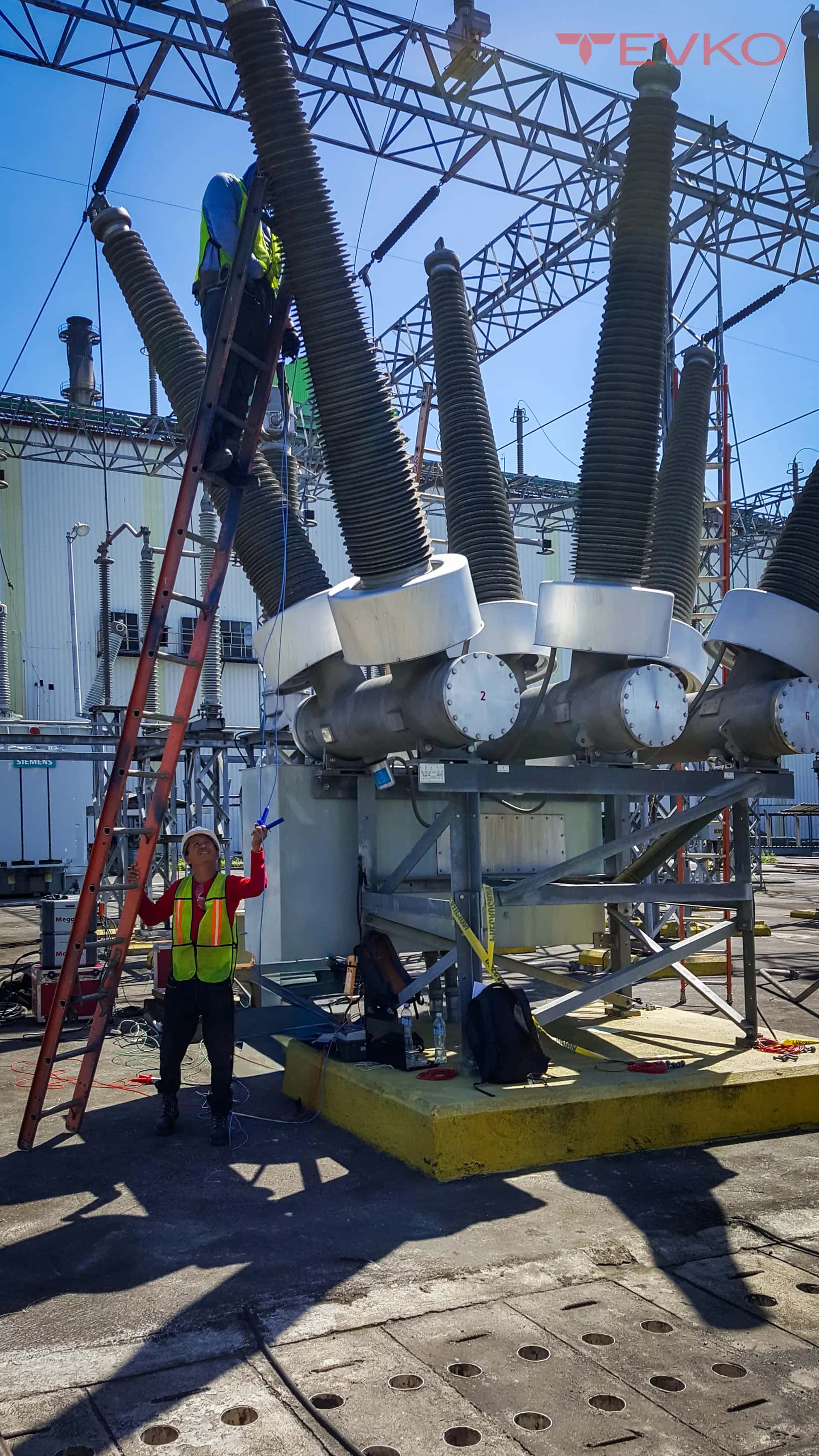
With the external inspection and data gathered, the real diagnosis starts with electrical tests on the de-energized unit. Dissolved gas analysis (DGA) of the oil reveals whether there was internal arcing or overheating and its severity; insulation resistance and the polarization index screen for moisture and contamination; the turns ratio (TTR) and winding resistance detect shorted turns or tap-changer damage; and sweep frequency response analysis (SFRA) confirms whether the windings deformed mechanically. That panel answers the core question: is the fault repairable on site, does the unit need to go to the shop, or does the damage force a replacement evaluation?
The honest answer to that question is what separates a good diagnosis from an expensive hunch. Not every tripped transformer is lost — many bushing, tap-changer and even winding faults are rehabilitated — and not everything should be rehabilitated at any cost. The repair-or-replace decision is made with the diagnostic data in hand: severity and location of the damage, age and general condition of the unit, cost and lead time of each option, and asset criticality. What is never wise is to decide under the sheer pressure of the operational clock, without data.
TEVKO attends transformer and substation emergencies 24/7 for critical assets: diagnosis with Omicron and Megger instrumentation, documented protocol, and a clear answer — your transformer returns to the level the manufacturer specified, or we tell you exactly why it cannot and what the path is. If your transformer is out of service right now, do not re-energize it blindly: isolate it, gather the nameplate and protection data, and contact us to prioritize the diagnosis.