
Electrical test
Dissolved gas analysis in oil (DGA)
Chromatography of the insulating oil to detect incipient faults — arcing, partial discharge and hot spots — from the gases dissolved in the oil, without de-energizing the transformer.
Dissolved gas analysis (DGA) is the most powerful predictive test for oil-filled transformers: it identifies incipient faults — electrical arcing, partial discharge, overheating — from the gases they generate and the oil dissolves, all while the equipment stays in service.
When a transformer's insulation suffers thermal or electrical stress, it decomposes the oil and paper, generating characteristic gases: hydrogen, methane, ethylene, acetylene, carbon monoxide and dioxide. Each fault type leaves a distinct gas 'signature'.
DGA extracts and quantifies those gases by chromatography. Interpretation — key gas, Doernenburg and Rogers ratios, Duval triangle — translates the concentrations into a diagnosis: acetylene signals high-energy arcing; hydrogen with methane, partial discharge; ethylene, severe overheating. IEEE C57.104 and IEC 60599 set the thresholds and methods.
At TEVKO we don't just deliver numbers: we take the sample with a protocol that avoids contamination, interpret against asset history and gas generation rate (ppm/day), and recommend action — monitor, reduce load, schedule an internal inspection. The trend matters more than an isolated value.
What the diagnosis includes
Chromatography and key gas
Quantification of the 7 key gases and a verdict by concentration against standard thresholds.
When it applies: Periodic predictive monitoring of the transformer.
Trend and generation rate
Comparison against history and ppm/day calculation to tell an active fault from a stable condition.
When it applies: When gases are elevated and action must be decided.
How we run the test
Sampling
Oil taken with a syringe/sealed container, no air contact, equipment in service.
Chromatography
Extraction and quantification of the dissolved gases in the lab.
Interpretation
Key gas, Rogers, Doernenburg and Duval triangle per IEEE/IEC.
Recommendation
Fault diagnosis, criticality and action plan (monitor, unload, internal inspection).
Frequently asked questions — dissolved gas analysis in oil (dga)
What does dissolved gas analysis (DGA) detect?
It detects incipient faults inside the transformer from the gases dissolved in the oil: acetylene indicates high-energy arcing; hydrogen and methane, partial discharge; ethylene, severe insulation overheating. It is the most sensitive predictive test and is done without de-energizing.
How often should DGA be done on a transformer?
The schedule must be documented against the manufacturer's instructions, asset condition and trends, load, environment, history and failure consequences. Engineering must justify the program and reassess it when anomalies appear; this page does not prescribe a universal interval.
What interpretation methods do you use?
Key gas, Doernenburg and Rogers ratios, and the Duval triangle, per IEEE C57.104 and IEC 60599. We combine methods because none is infallible alone, and we contrast them against the transformer's own history.
Does the transformer need to be taken out of service?
No. The oil sample is taken with the transformer energized, following a protocol that avoids contaminating the sample with air. It is one of DGA's advantages over the electrical tests that do require an outage.
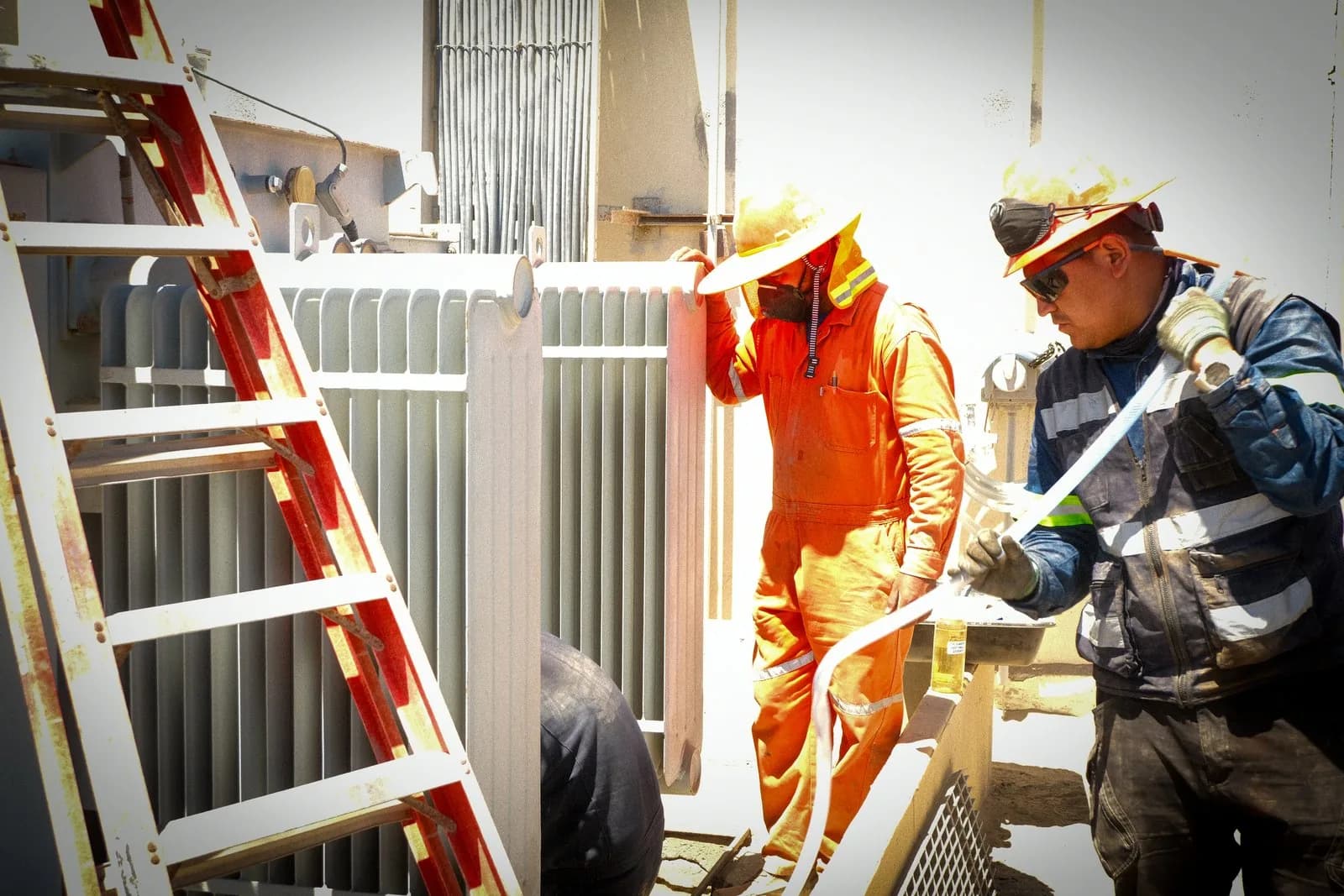
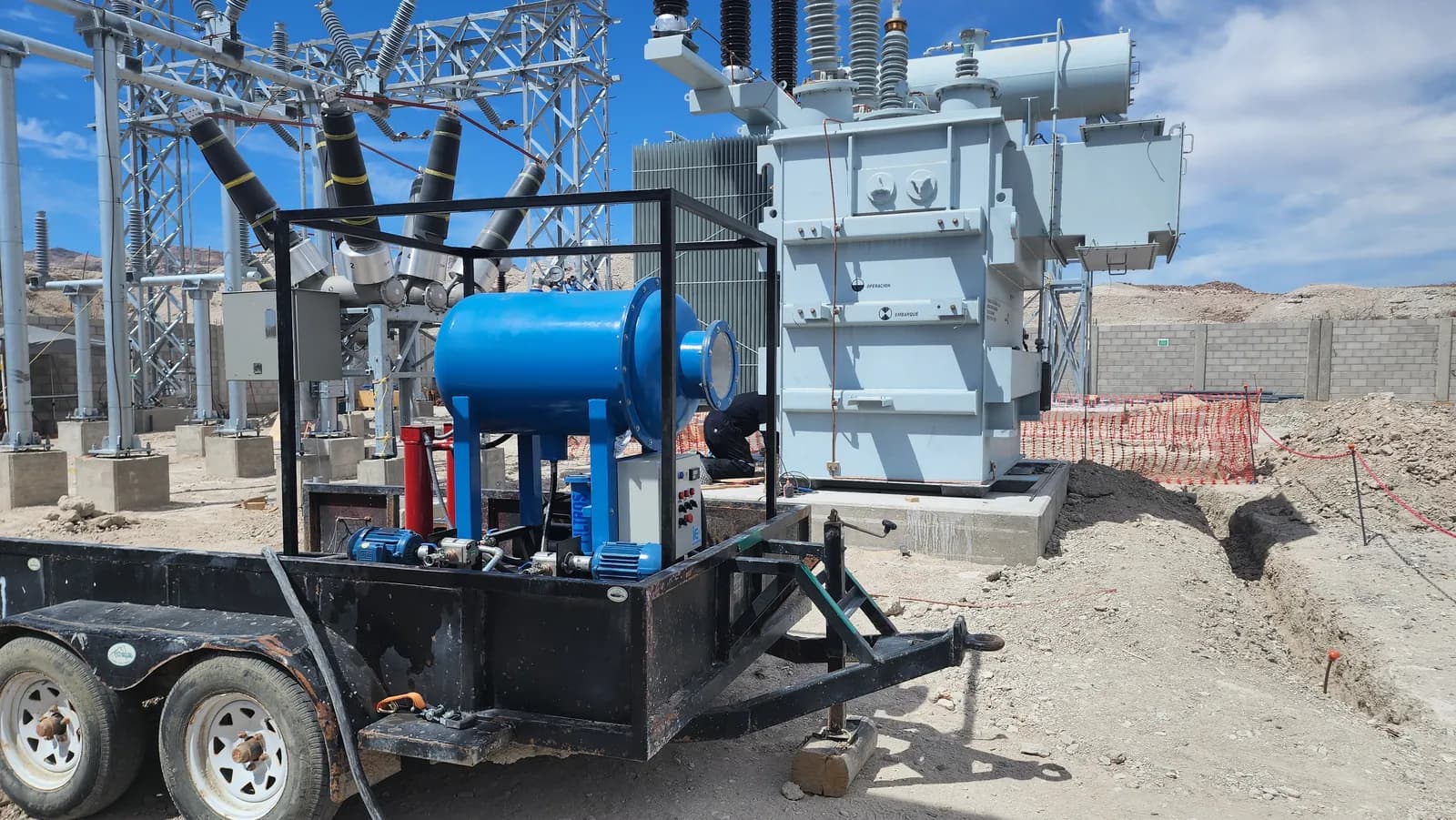
Dissolved gas analysis in oil (DGA) in images

Related tests and services
Talk to a transformer specialist
Tell us about your asset so we can define the assessment scope and prepare a tailored quote.