
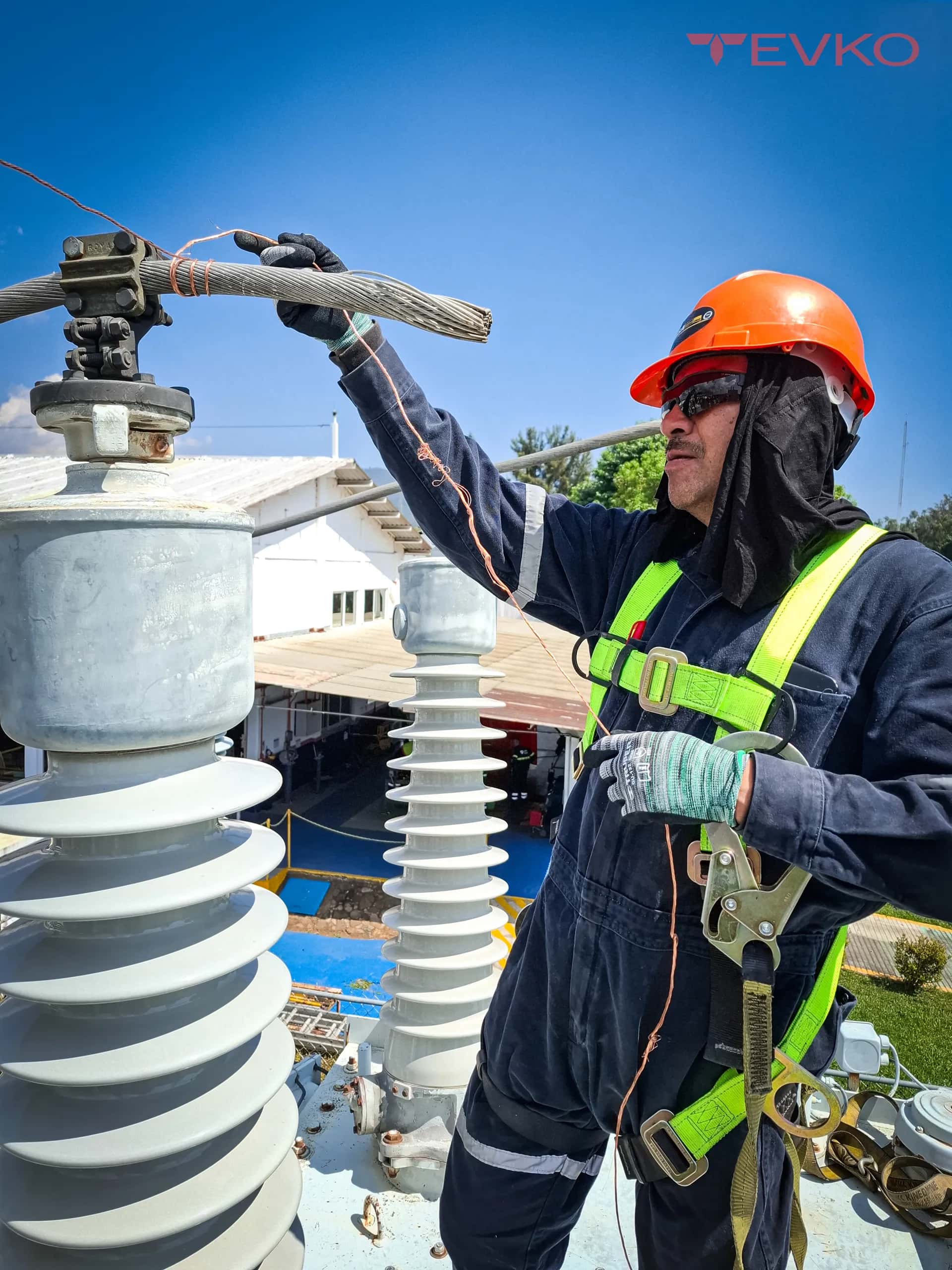
Electrical test
Insulation resistance and polarization index
Measurement of insulation resistance with a megohmmeter and calculation of absorption and polarization indices to assess moisture and cleanliness of the dielectric system.
Insulation resistance, measured with a megohmmeter at DC voltage, is the most common screening test to detect moisture and dirt in the insulation. Its derived indices — dielectric absorption (DAR) and polarization (PI) — normalize the result and make it comparable across equipment and temperatures.
When DC voltage (500 V to 5 kV depending on equipment) is applied between windings and ground, healthy insulation passes a current that decreases over time. The resistance measured at 1 minute is the basic reference, but the absolute value depends heavily on temperature and equipment size.
That is why indices are calculated: the dielectric absorption ratio (R60s/R30s) and the polarization index (R10min/R1min). A PI below 1.0–1.5 suggests wet or contaminated insulation; values of 2.0 or more indicate dry, clean insulation, regardless of transformer size.
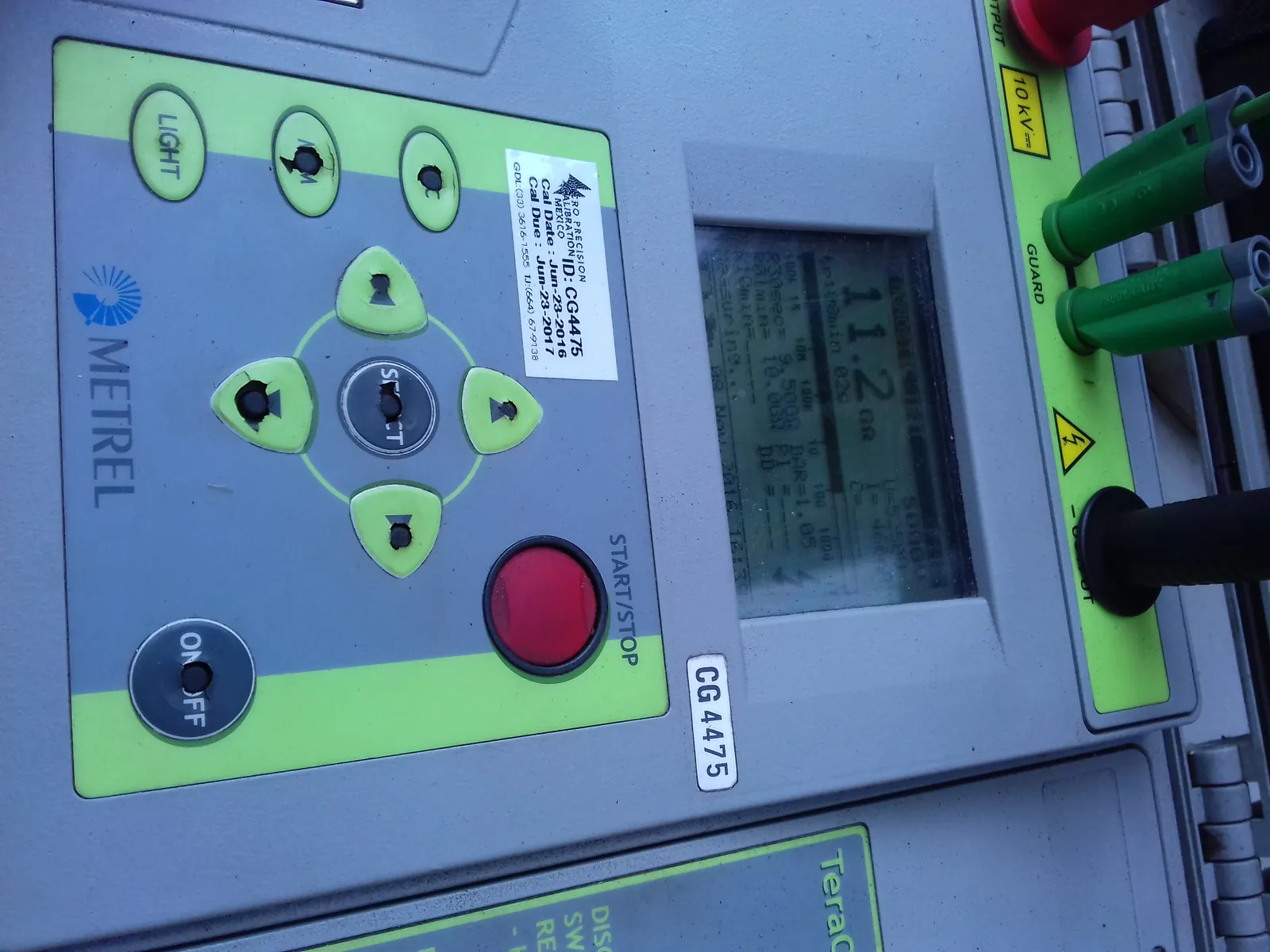
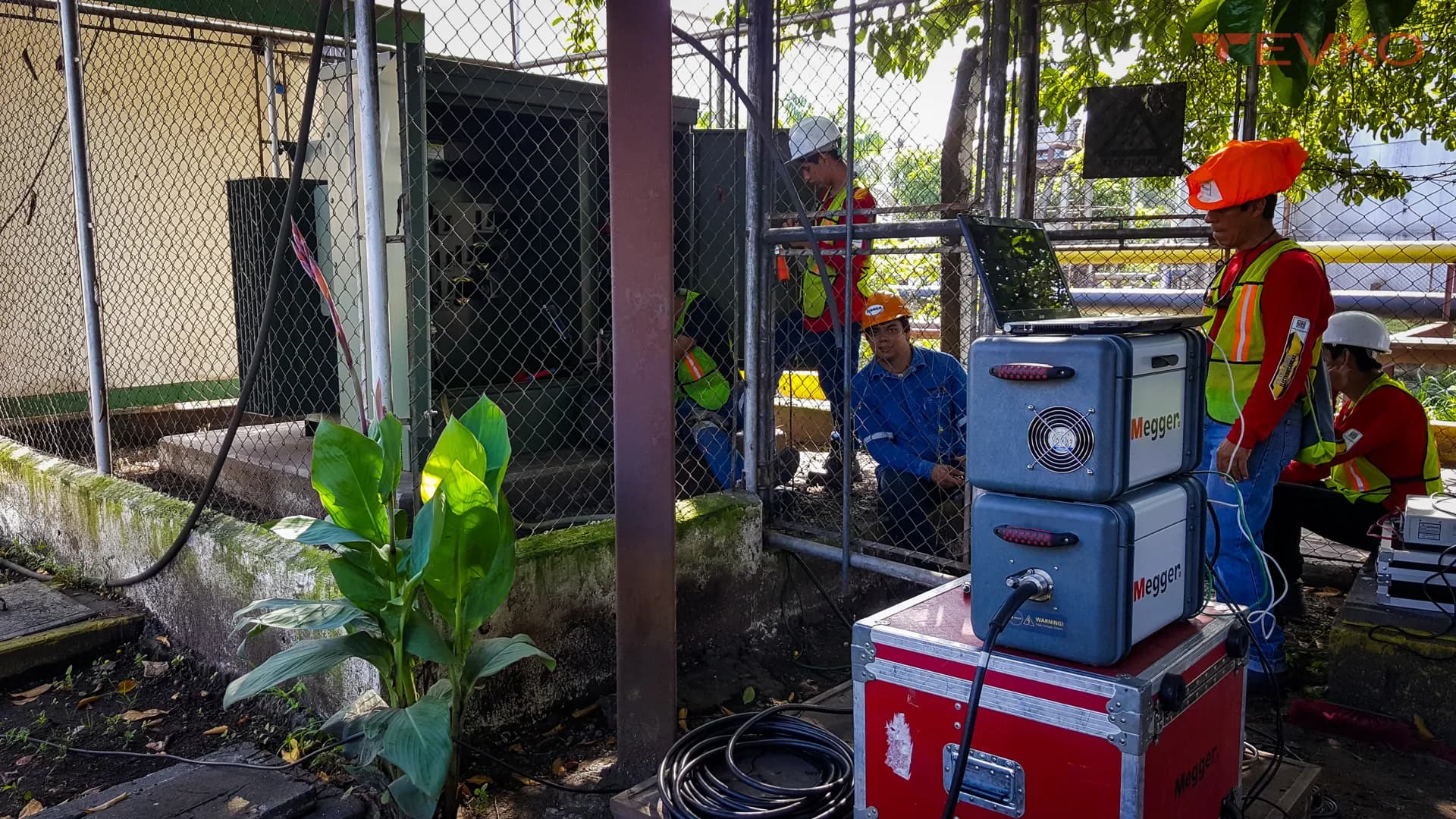
At TEVKO we run the test with Megger megohmmeters (up to 10 kV), correcting for temperature and recording the full curve. It is the first test we apply in the field because, being non-destructive and fast, it decides whether the asset can receive the elevated-voltage tests that follow.
Indices we calculate
Dielectric absorption ratio (DAR)
R60s/R30s ratio, a quick read of insulation condition in the field.
When it applies: Initial screening before elevated-voltage tests.
Polarization index (PI)
R10min/R1min ratio, a reliable moisture diagnosis independent of equipment size.
When it applies: Assessment of insulation suspected of moisture.
How we run the test
Isolation
Equipment de-energized, windings bonded and temperature recorded.
Measurement
Resistance at 30 s, 1 min and 10 min in each winding configuration.
Indices
Calculation of DAR and PI, temperature correction to 20 °C.
Decision
Verdict: ready to continue testing or requires prior drying/cleaning.
Frequently asked questions — insulation resistance and polarization index
What is the polarization index and what value is acceptable?
It is the ratio between insulation resistance measured at 10 minutes and at 1 minute. A value below 1.0–1.5 indicates wet or contaminated insulation; 2.0 or more indicates dry, healthy insulation. Being a ratio, it does not depend on equipment size or (largely) temperature.
What is the insulation resistance test for?
It detects moisture, dirt and insulation degradation quickly and non-destructively. It is the initial screening test: it decides whether the transformer is in condition to receive the elevated-voltage tests (power factor, dielectric strength) that come afterward.
Why is it corrected for temperature?
Insulation resistance varies strongly with temperature — roughly halving for every 10 °C increase. To compare against standards and history, results are corrected to a reference temperature, normally 20 °C.
Does this test also apply to cables and substations?
Yes. Insulation resistance is measured on transformers, power cables, breakers, busbars and rotating machines. In substations it is a standard part of primary-equipment maintenance.
Insulation resistance and polarization index in images
Related tests and services
Talk to a transformer specialist
Tell us about your asset so we can define the assessment scope and prepare a tailored quote.