
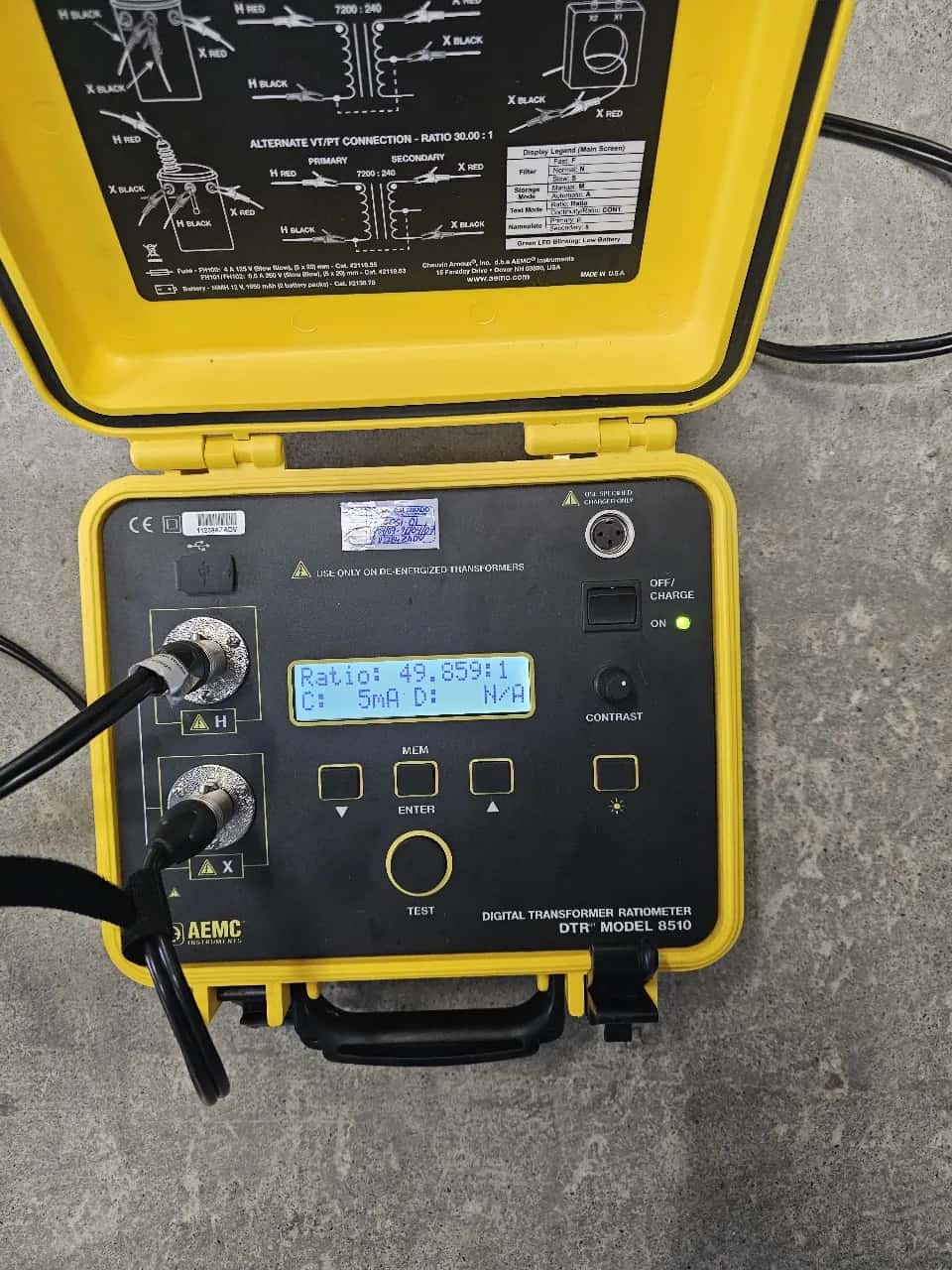
Electrical test
Transformer turns ratio test (TTR)
Verifies the turns ratio between high- and low-voltage windings to detect shorted turns, tap-changer faults and connection errors.
The transformer turns ratio (TTR) test compares the measured turns ratio against the nameplate value, at every tap-changer position. It is the most direct way to detect shorted turns, open windings and tap-changer faults before energizing.
TTR measures the ratio between the number of turns of the primary and secondary windings by applying a known voltage on the high side and measuring the induced voltage on the low side. The result is compared against the nameplate ratio; the admissible deviation is typically ±0.5% per IEEE C57.12.90.
A ratio out of tolerance reveals shorted turns, incorrect connections, or a tap changer that fails to make contact in some position. That is why the test is run at ALL tap positions, not just the nominal one: the pattern of variation between positions is what diagnoses the condition of the changer.
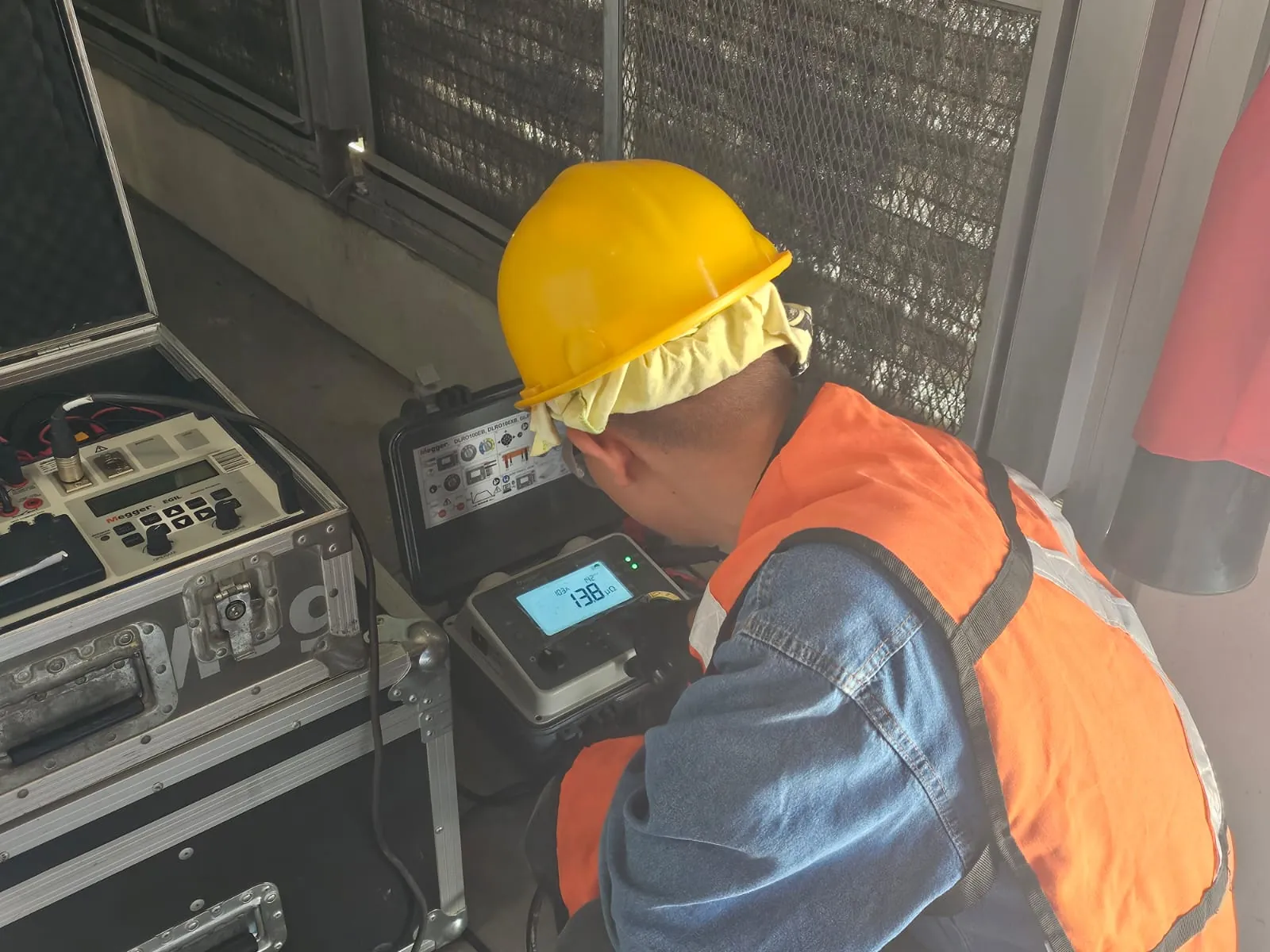
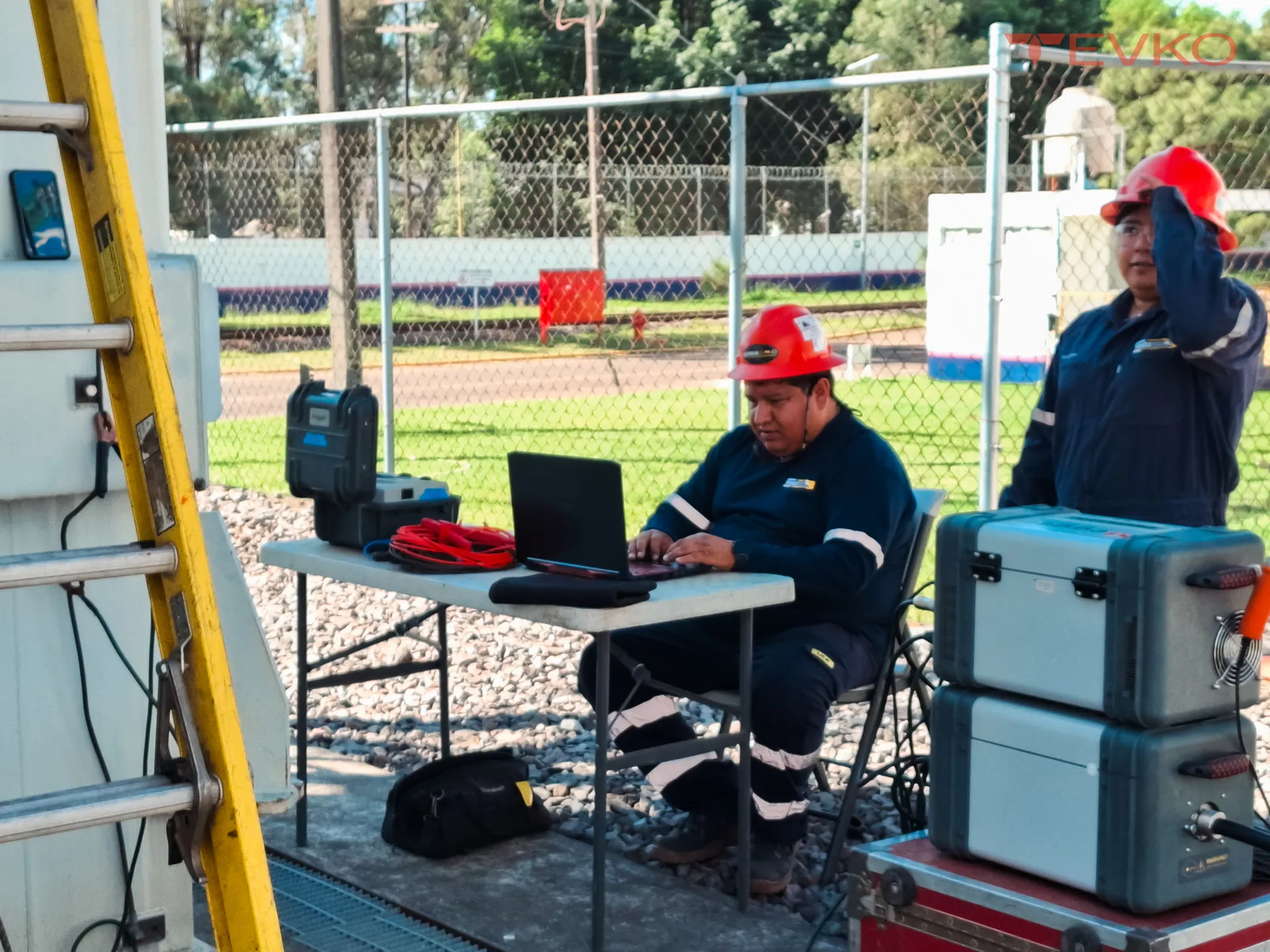
At TEVKO we run TTR with Omicron equipment that measures ratio, excitation current and phase displacement simultaneously, which makes it possible to tell a winding problem from a core or tap-changer problem. Every result is recorded in the protocol, compared against nameplate and asset history.
What TTR diagnoses
Shorted turns
A ratio lower than nominal in a winding indicates shorted turns due to inter-turn insulation degradation.
When it applies: After an overvoltage event, discharge or through-fault.
Tap-changer fault
Irregular variation of the ratio between tap positions reveals dirty, worn or open contacts in the OLTC/DETC.
When it applies: Maintenance of transformers with an on-load tap changer.
How we run the test
Outage
Transformer de-energized and isolated, with grounds removed from the windings to be measured.
Measurement
Ratio, excitation current and phase displacement at all tap-changer positions.
Comparison
Against nameplate ratio, between phases and against asset history.
Protocol
Report with percentage deviation per position and an acceptance verdict.
Frequently asked questions — transformer turns ratio test (ttr)
What is the transformer turns ratio (TTR) test for?
It verifies that the turns ratio between windings matches the nameplate. It detects shorted turns, open windings, reversed connections and tap-changer faults. It is one of the first acceptance tests after a repair and part of maintenance diagnostics.
What is the acceptable tolerance in a TTR test?
IEEE C57.12.90 sets a maximum deviation of ±0.5% from the calculated nameplate ratio. Larger deviations indicate an internal problem that must be investigated before energizing the transformer.
Is it measured at every tap-changer position?
Yes. The test is run at each tap-changer position because the pattern of variation between positions is what reveals whether the changer makes contact correctly. Testing only the nominal position hides changer faults.
Does the transformer need to be out of service?
Yes, the TTR test is performed with the transformer de-energized and the windings isolated. It is coordinated with the asset outage, usually together with the rest of the electrical test protocol.
Transformer turns ratio test (TTR) in images

Related tests and services
Talk to a transformer specialist
Tell us about your asset so we can define the assessment scope and prepare a tailored quote.