
By TEVKO Technical Management — TEVKO · Grupo TEMISA · Published
In a transformer, the way the core and windings are assembled defines two construction families: column (core form) and shell form (armored). The difference is not cosmetic — it changes the mechanical behavior under short circuit and, above all, the complexity of the repair. Knowing which one you have is the first step to understanding which workshop can service it.
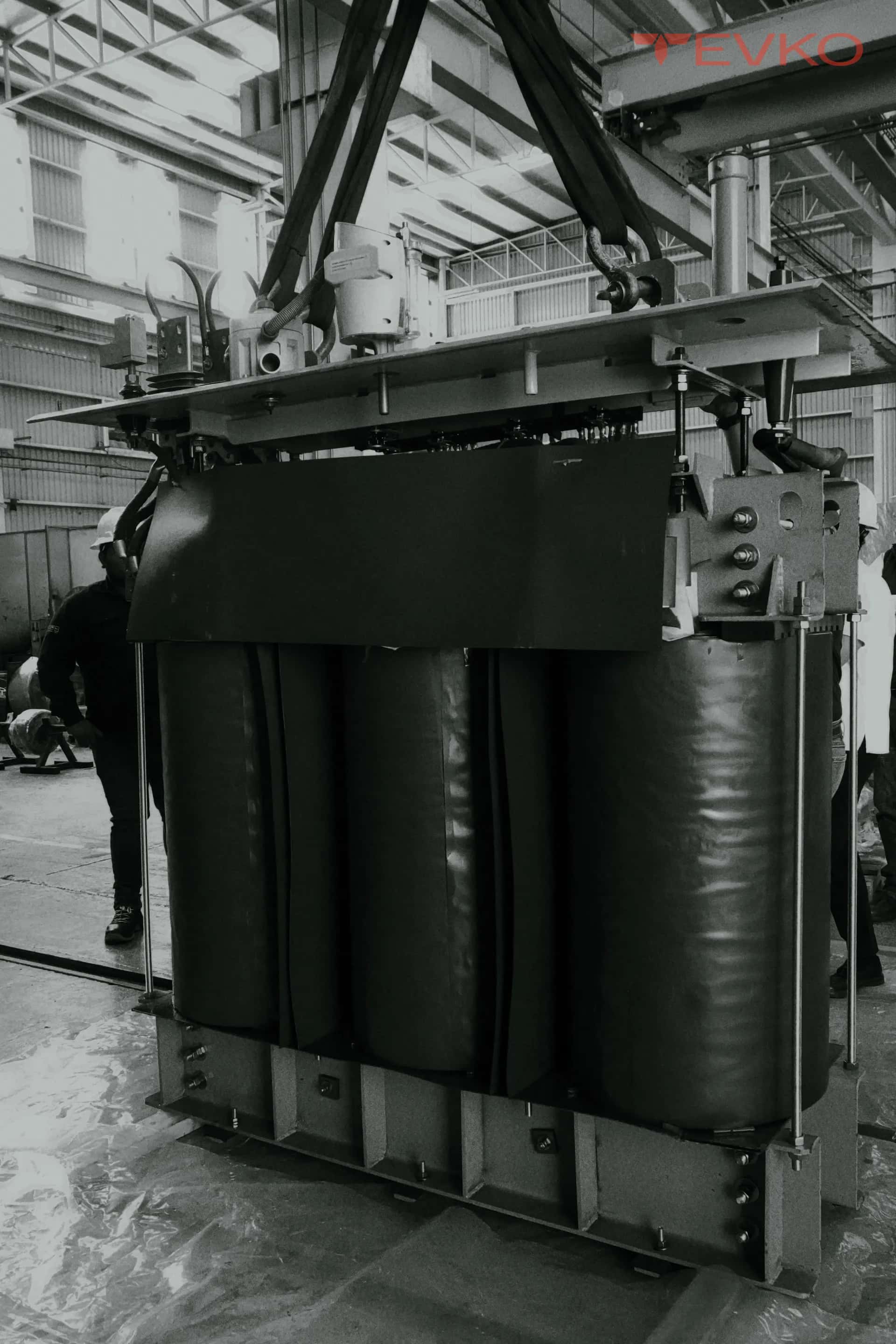
In a column (core-form) transformer, the windings surround the core columns: the core is inside and the coils outside. It is the most common construction and most workshops are equipped to repair it; access to the windings, once the active part is removed, is relatively direct.
In a shell-form (armored) transformer it is the opposite: the core envelops the windings, which sit 'armored' within the iron. This construction offers greater mechanical strength against short-circuit forces — which is why it is used in demanding applications — but makes repair far more complex: working on the windings means disassembling a core structure that wraps the coils, with specialized maneuvers and know-how.
That complexity is why very few workshops in Mexico and Latin America repair shell-type transformers. It is not just cranes and space: it requires specific experience in the disassembly and reassembly of the shell structure, in insulation treatment and in the acceptance tests that confirm the active part is mechanically and electrically sound.
At TEVKO we repair both column and shell-type (armored) transformers subject to workshop feasibility by weight, dimensions and process, including tap-changer repair. Every intervention starts from a diagnosis with real electrical data and closes with an acceptance test protocol — including SFRA to verify the internal geometry after reassembly.