
By TEVKO Technical Management — TEVKO · Grupo TEMISA · Published
Choosing who repairs a power transformer is one of the highest-stakes maintenance decisions a plant can make. The asset is expensive, its lead time for replacement is long, and a poorly executed repair does not just waste money — it can return a unit to service that fails again, this time catastrophically. For companies setting up or expanding operations in Mexico under nearshoring, often without a long-standing local supplier, the question is sharper: how do you tell a real transformer shop from a risky one? These are the criteria that matter.
Start with capability range. A shop should state clearly the maximum rating and voltage class it actually handles — in MVA and kV — and the construction types it can service, including shell-type (acorazado) transformers, which few shops in Mexico and Latin America can rehabilitate. A vendor that is vague about its ceiling, or that takes on a 230 kV unit with experience only on distribution transformers, is a red flag. Match the shop's proven envelope to your asset, not to its marketing.
Second, look for genuine independence and multi-brand capability. An independent service provider works on transformers of any manufacturer — Prolec GE, Siemens Energy, ABB, Hitachi Energy, Schneider Electric, Mitsubishi, WEG, GE, Hyundai — without being tied to a single OEM. That independence matters: it means the recommendation to repair, rehabilitate or replace is driven by your asset's condition, not by what the vendor is trying to sell. Beware of a 'repair' that is really a push to buy a specific new unit.
Third, demand real diagnostic instrumentation and the ability to interpret it. A serious shop diagnoses with recognized test instrumentation — brands such as Omicron and Megger — and, more importantly, reads the results against the nameplate, between phases and against the asset's history. The instrument is commodity; the interpretation is the value. Ask what tests they run before and after a repair: turns ratio (TTR), power factor/Tan Delta, insulation resistance, DGA, SFRA. A shop that cannot tell you its acceptance-test protocol is guessing.
Fourth, insist on documented protocol and clear standards language. The work should be executed under the applicable maintenance and testing standards — IEEE C57, IEC 60076, the Mexican NMX-J references — and delivered with a documented protocol: real electrical data, before-and-after measurements, and a written record of what was done. Note a subtle but important distinction: standards are applied, not 'held' as certifications. A vendor that blurs that line, or that promises generic guarantees without data, is selling comfort, not engineering.
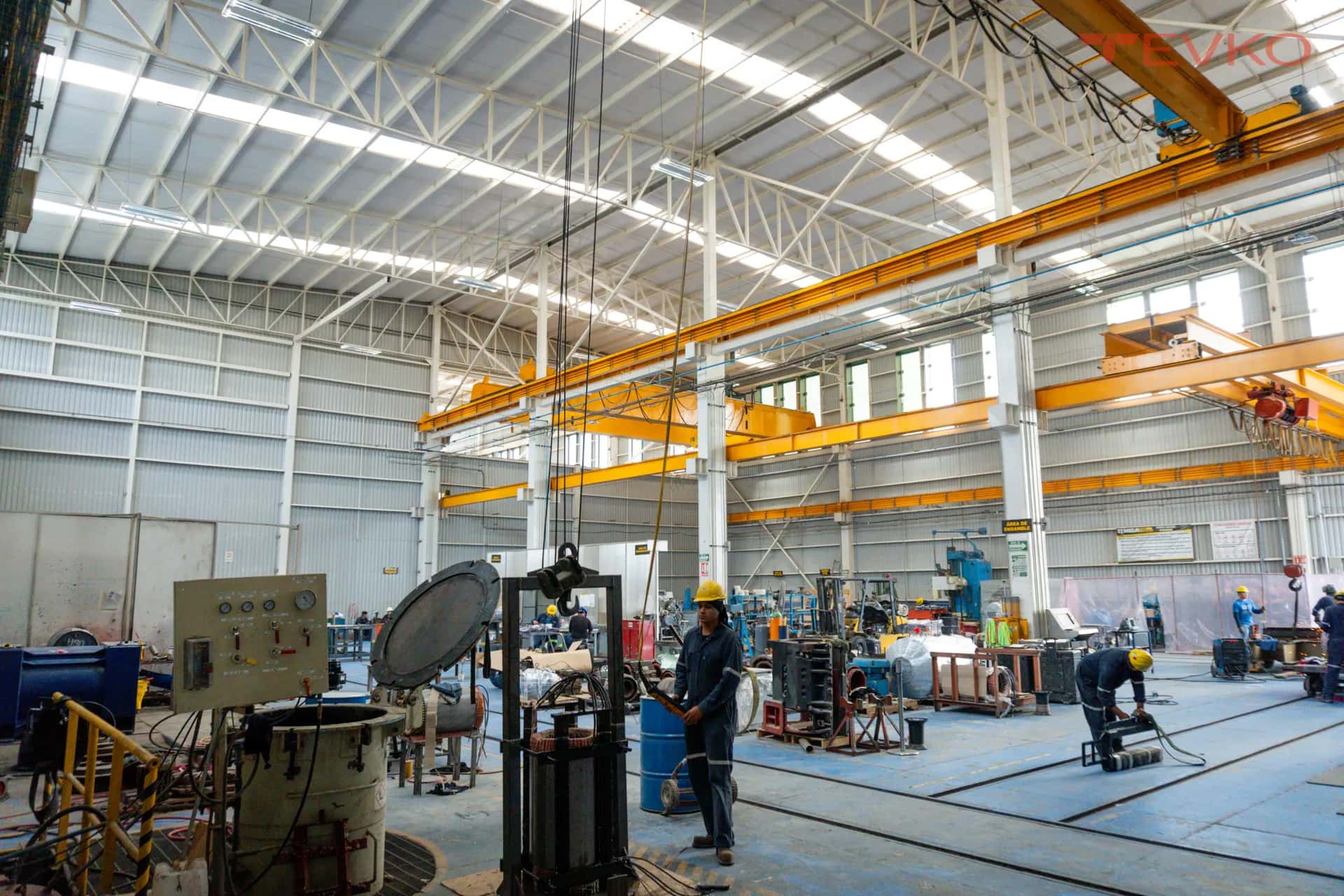
Fifth, understand the difference between field service and shop work, and confirm the physical capacity. Maintenance, testing and minor repairs happen on site; major rehabilitation — rewinding, core repair, insulation replacement — is done at the shop, and that requires real infrastructure: cranes of adequate capacity, drying ovens, an electrical test bench, controlled space. Ask to see it. A shop floor with 60-ton cranes, industrial ovens and a test bench tells you the rehabilitation can actually be executed, not subcontracted out of sight.
Finally, verify backing and references. Years of operation, the engineering depth behind the shop, and verifiable cases or references from similar assets in your sector carry real weight — more than any brochure. The honest promise to look for is concrete: your transformer or substation returns to the performance the manufacturer specified, or they tell you exactly why it cannot, with real electrical data and a documented protocol. Anything vaguer than that should make you ask more questions.
TEVKO, the transformers-and-substations division of Grupo TEMISA, services units of any manufacturer from a 5,600 m² plant in Tlajomulco, Jalisco — with 60-ton cranes, industrial ovens and an electrical test bench — backed by more than six decades of Grupo TEMISA engineering in the electromechanical sector. Maintenance, rehabilitation, diagnostics and testing under IEEE C57 and IEC 60076, with Omicron and Megger instrumentation and a documented protocol on every job.