
Electrical test
Transformer excitation current test
Measurement of the no-load current the transformer draws to detect shorted turns, core defects and tap-changer faults.
The excitation current test applies a low AC voltage to one winding with the others open and measures the no-load current the transformer draws. The pattern of that current between phases reveals shorted turns, core problems and tap-changer faults that other tests can miss.
With the transformer de-energized, a low AC voltage is applied phase by phase to the high-voltage winding while the low-voltage winding stays open, and the resulting magnetizing (excitation) current is measured. A healthy three-phase core produces a characteristic pattern — typically two similar outer-phase readings and a lower center-phase reading — so the diagnosis comes from the shape of the pattern, not from a single number.
Deviations from the expected pattern point to specific faults: shorted turns (which raise the current), core problems such as shorted laminations or a defective core ground, mechanical winding movement, and tap-changer contact issues — which is why the test is run at every tap position. It is a powerful complement to the turns ratio test: together they separate a winding problem from a core or changer problem.
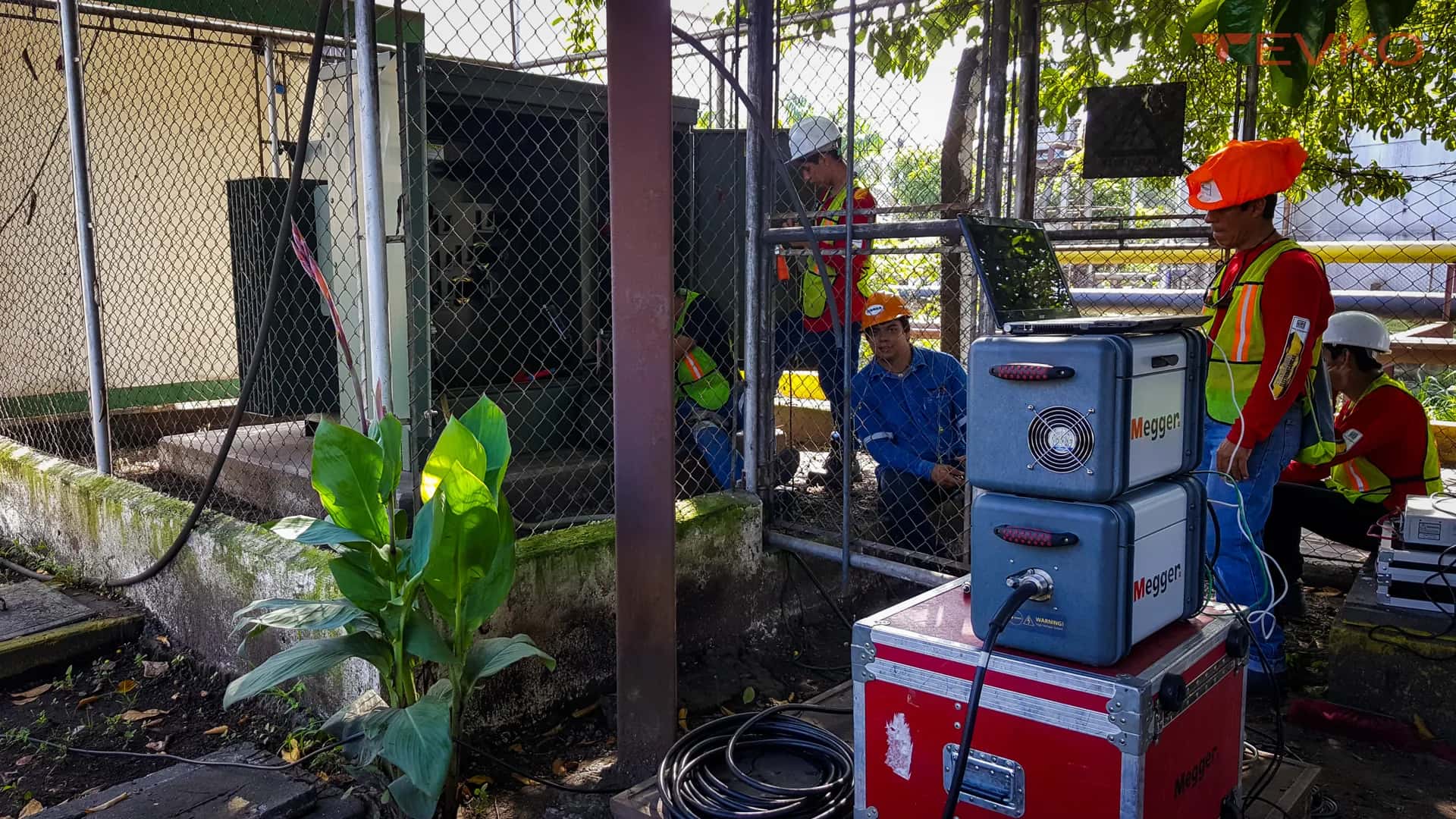
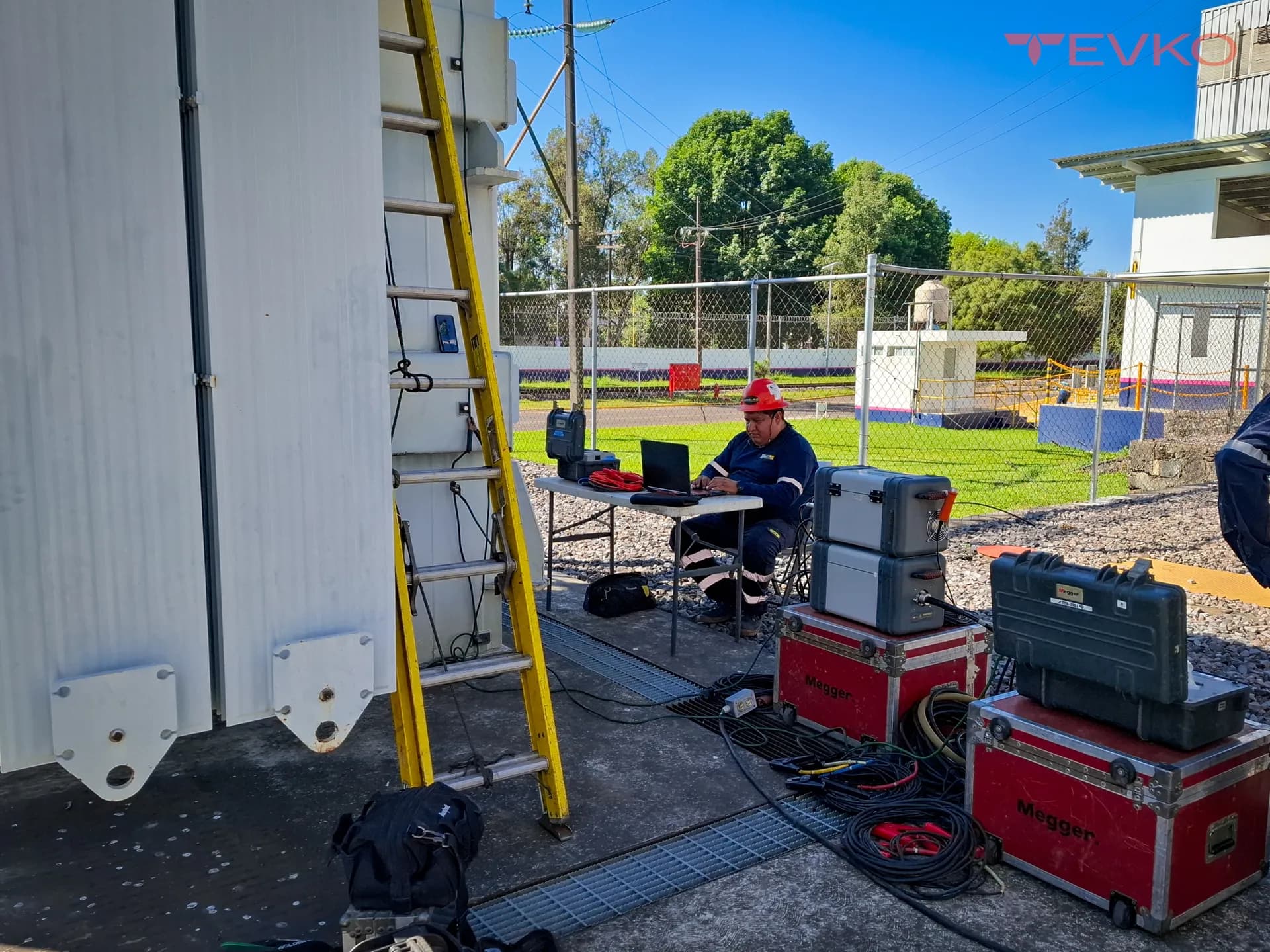
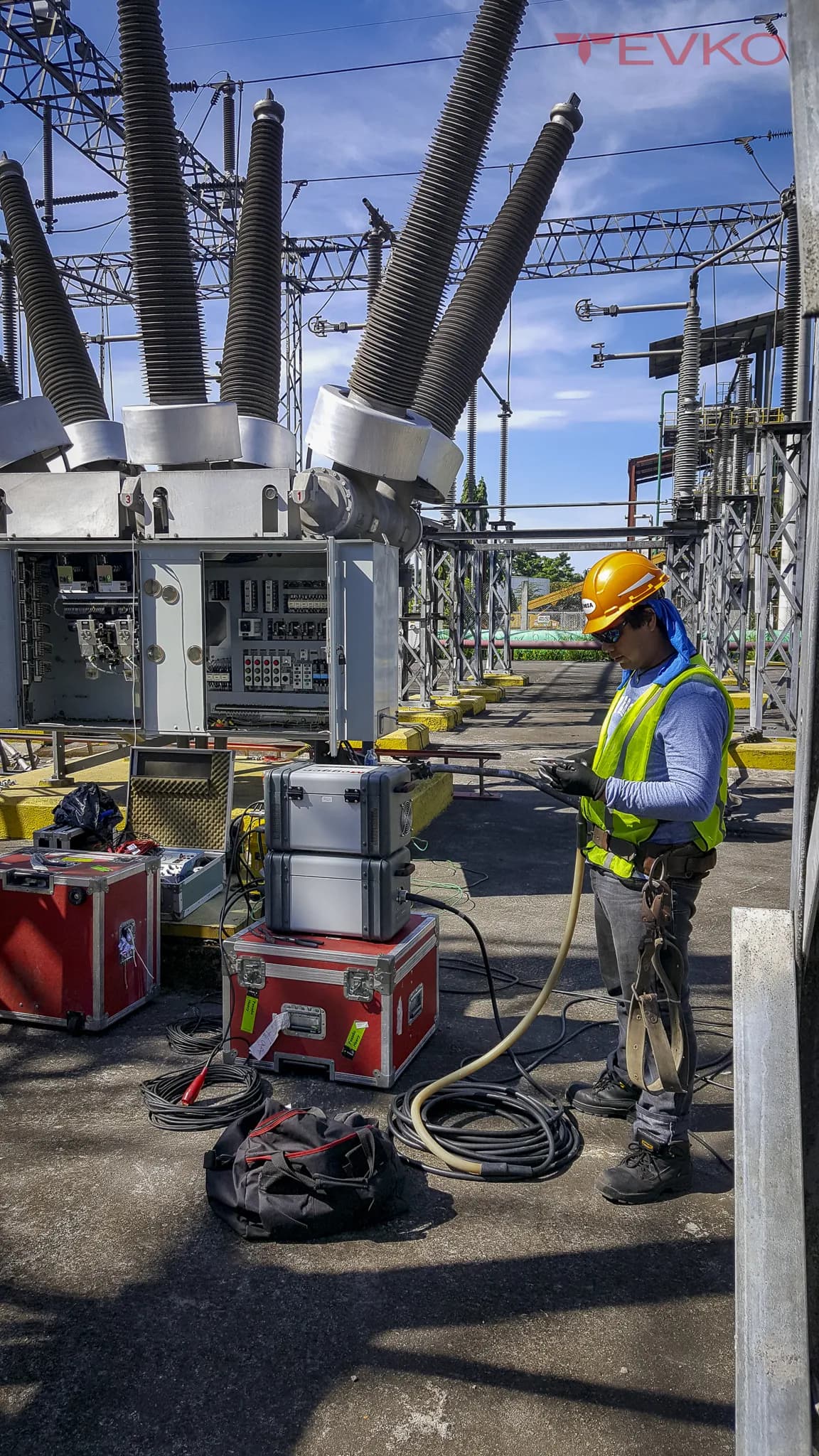
At TEVKO we measure excitation current with Omicron and Megger instrumentation, comparing the pattern between phases and against the asset's history, and recording every reading in the documented protocol under IEEE C57.152. The interpretation — comparing the pattern, not just the magnitude — is where the diagnostic value lives.
What excitation current diagnoses
Shorted turns / core defect
An abnormally high or asymmetric excitation current reveals shorted turns or core problems such as shorted laminations.
When it applies: After a through-fault or when a core/winding problem is suspected.
Tap-changer fault
Abnormal current at specific tap positions reveals worn or open changer contacts.
When it applies: Maintenance of transformers with an on-load or de-energized tap changer.
How we run the test
Outage
Transformer de-energized and isolated; low-voltage winding left open.
Measurement
Controlled low AC voltage applied phase by phase; excitation current read at all tap positions.
Comparison
Pattern compared between phases and against asset history, alongside the turns ratio result.
Protocol
Documented report with pattern analysis and acceptance verdict.
Frequently asked questions — transformer excitation current test
What does the excitation current test detect?
Shorted turns, core defects (shorted laminations, defective core ground), mechanical winding movement and tap-changer contact faults. The diagnosis comes from the pattern of the no-load current between phases, not from an isolated value.
Why is the pattern between phases important?
A healthy three-phase core gives a characteristic pattern — usually two similar outer phases and a lower center phase. A deviation from that pattern is what flags a fault, so the test is interpreted by comparison between phases and against history.
Is it run at every tap position?
Yes. Tap-changer contact problems show up as abnormal excitation current at specific positions, so the test is performed at all tap-changer positions, typically together with the turns ratio test.
Does the transformer need to be de-energized?
Yes. The excitation current test is performed with the transformer out of service and isolated, applying a controlled low AC voltage. It is coordinated with the rest of the de-energized electrical test protocol.
Transformer excitation current test in images
Related tests and services
Talk to a transformer specialist
Tell us about your asset so we can define the assessment scope and prepare a tailored quote.