
Service
Dielectric oil filtering
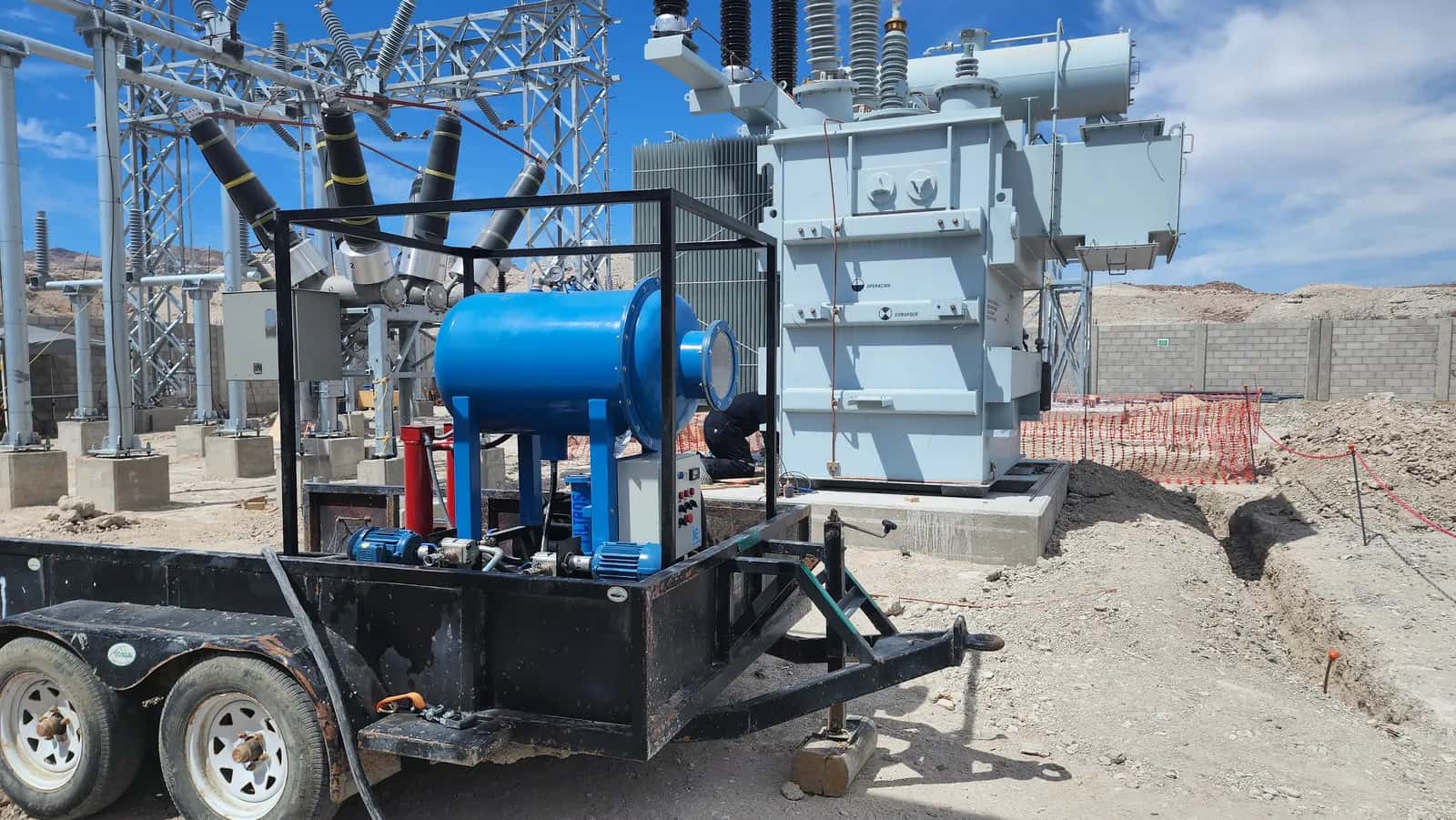
Vacuum dehydration and filtering of transformer dielectric oil to restore dielectric strength and remove moisture, gases and particles.
Filtering by vacuum thermo-dehydration removes moisture, dissolved gases and particles from the insulating oil, restoring its dielectric strength when the oil is fundamentally sound but contaminated.
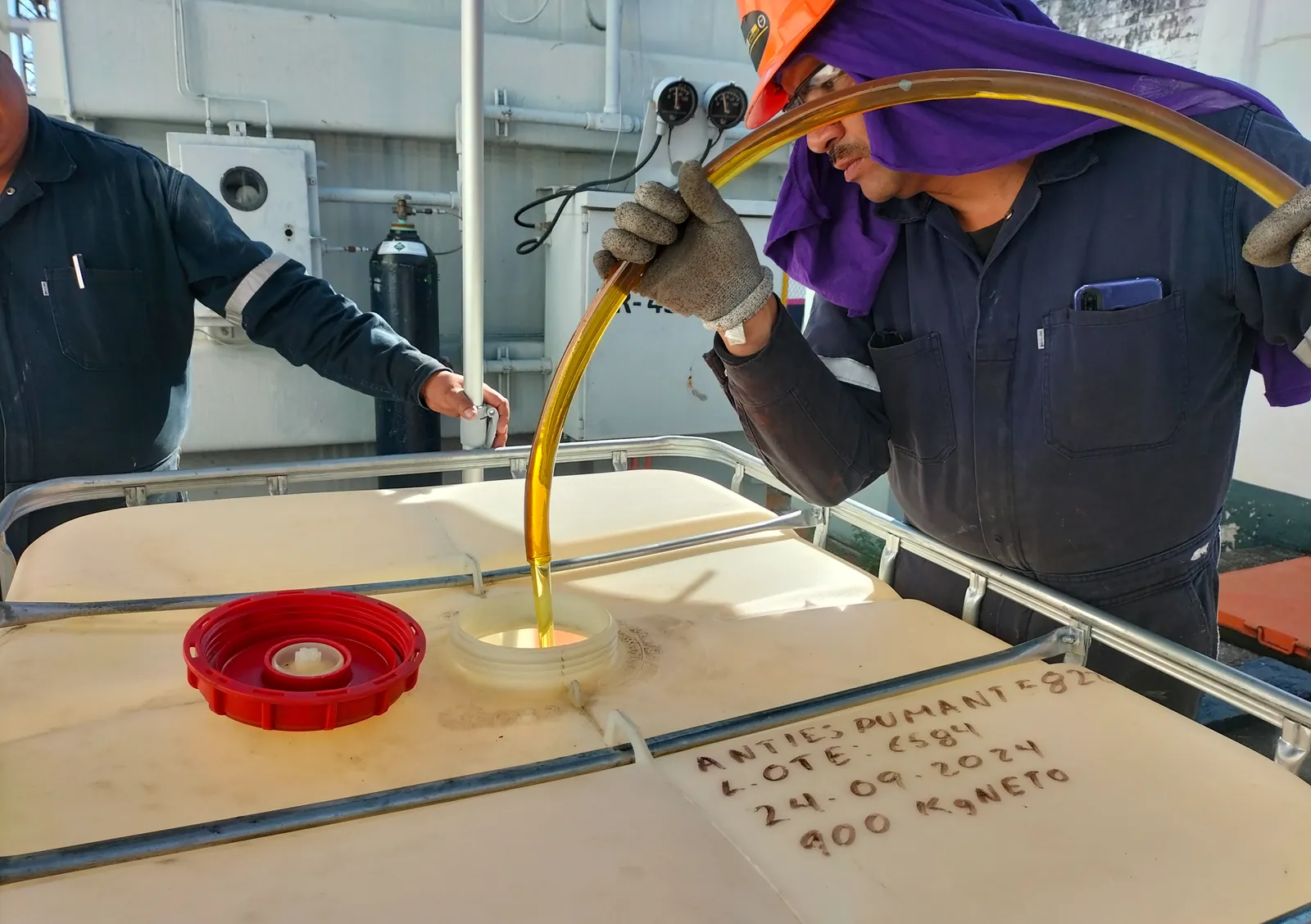
The dielectric oil is the transformer's insulation and coolant. Moisture and particles lower its dielectric strength and accelerate insulation ageing; filtering restores those properties without changing the oil's base chemistry.
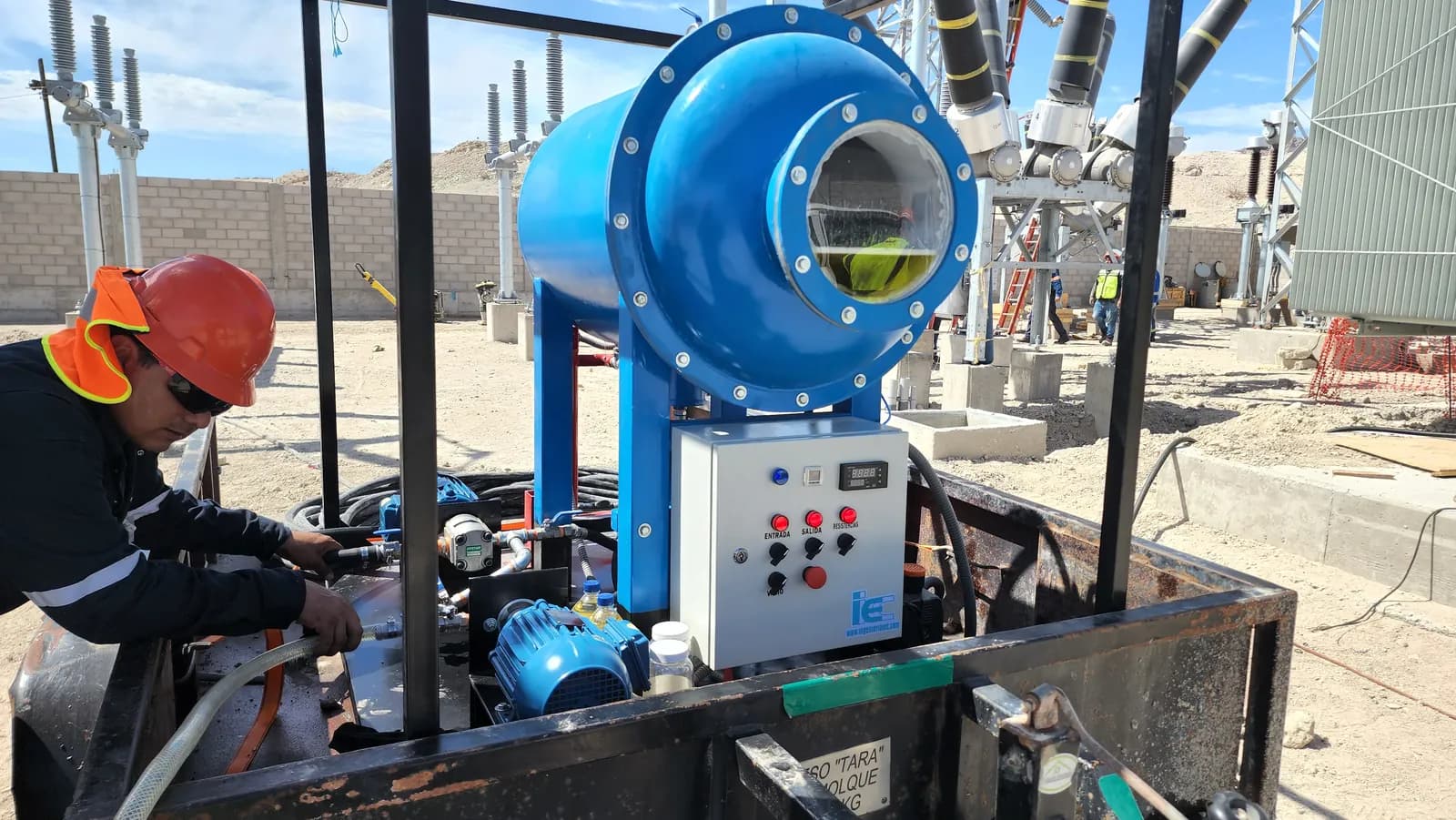
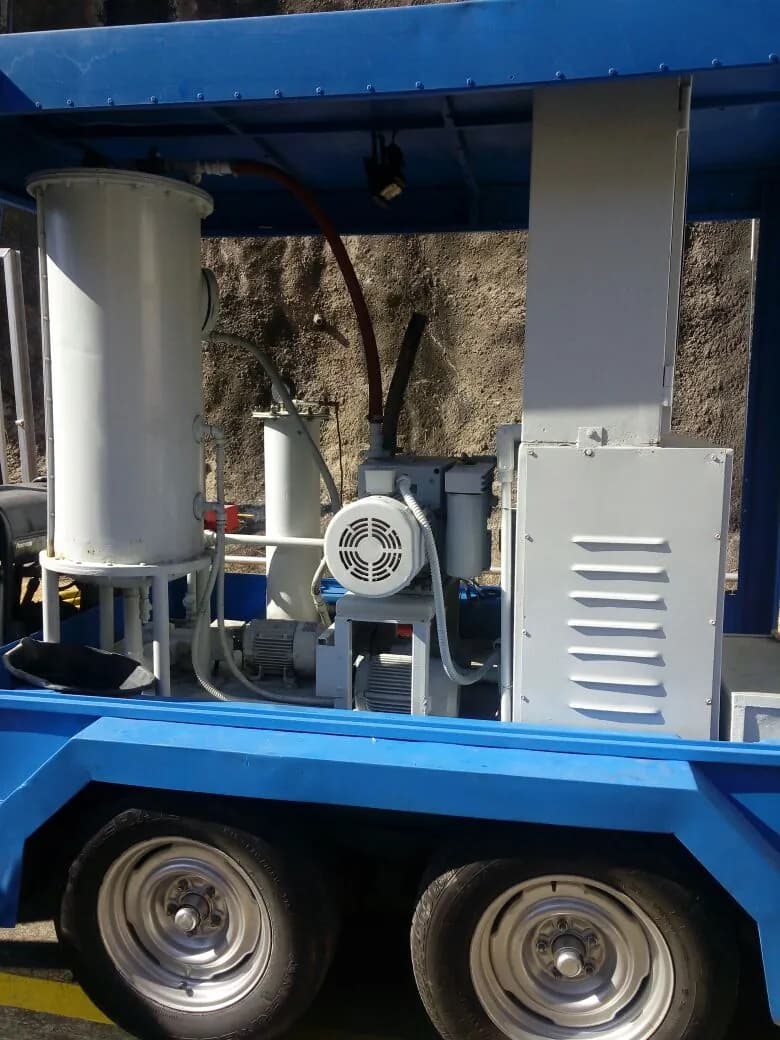
Vacuum thermo-dehydration heats the oil and exposes it to vacuum, extracting water and gases, while filters remove solid particles. It is the right option when the physicochemical analysis shows a sound but contaminated oil.
When the oil is chemically degraded (high acidity), regeneration or replacement is the right path instead — the decision always comes from the oil analysis, not from age.
What we treat
Vacuum thermo-dehydration
Removal of moisture and dissolved gases from the oil.
When it applies: Oil with high moisture but sound chemistry.
Particle filtering
Removal of solid contaminants to restore dielectric strength.
When it applies: Oil contaminated with particles.
How we execute the service
Analysis
Physicochemical analysis to confirm filtering is the right option.
Treatment
Vacuum thermo-dehydration and particle filtering.
Verification
Dielectric strength and moisture re-tested.
Protocol
Documented before/after report.
Frequently asked questions — dielectric oil filtering
What does dielectric oil filtering do?
It removes moisture, dissolved gases and particles by vacuum thermo-dehydration, restoring the oil's dielectric strength when the oil is sound but contaminated.
When is filtering enough vs. regeneration?
Filtering suits a chemically sound but contaminated oil. If acidity is high (oxidation products), regeneration or replacement is needed. The oil analysis decides.
Can it be done in service?
In some cases filtering can be done with the transformer energized; in others an outage is preferred. We define it per asset and scope.
Does filtering remove moisture from the paper?
It mainly treats the oil; deep moisture lives in the paper. Severe cases require drying of the solid insulation, not just oil filtering.
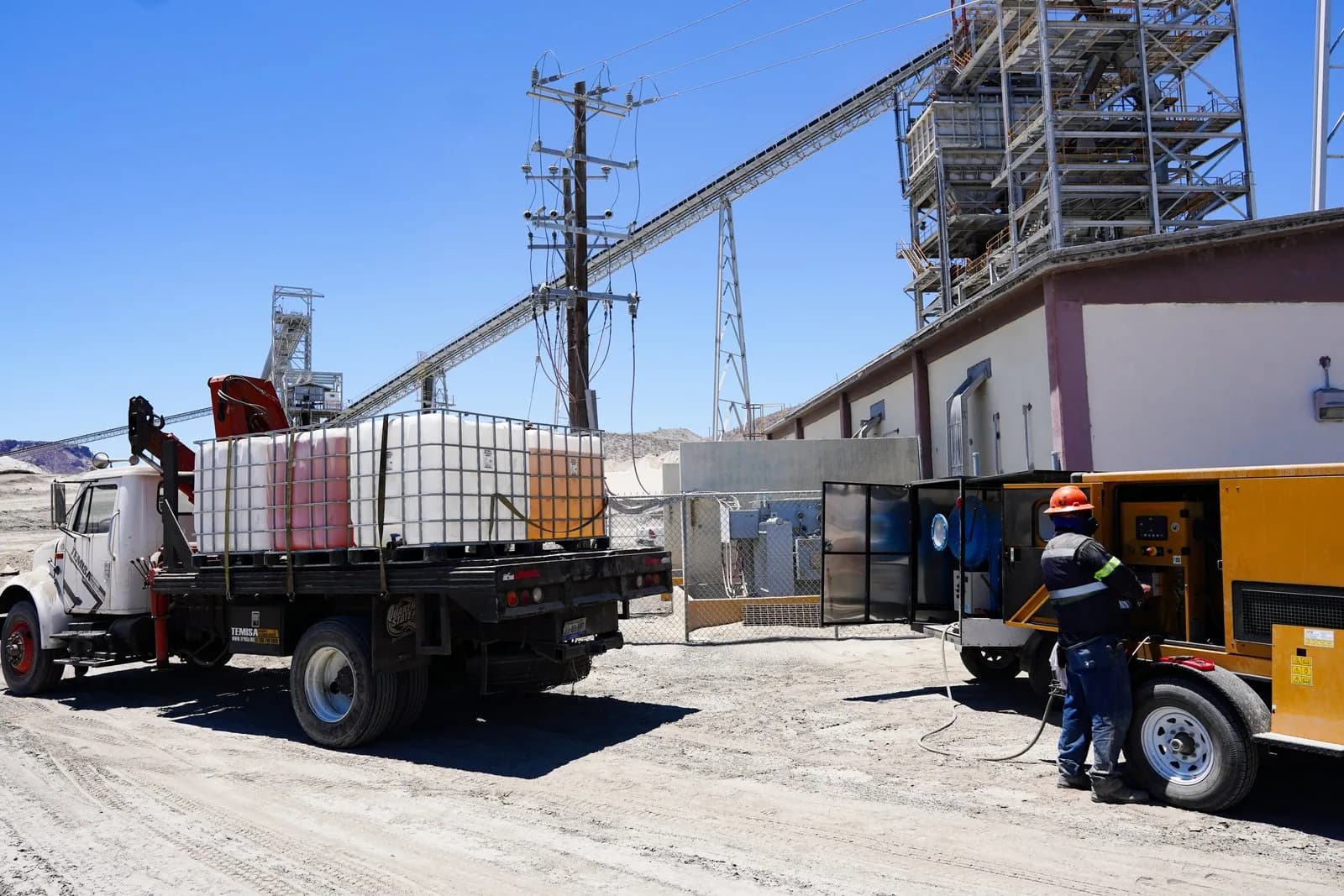
Dielectric oil filtering in images

Related services
Talk to a transformer specialist
Tell us about your asset so we can define the assessment scope and prepare a tailored quote.